
IRS TAX DEBT HARDSHIP RELIEF
CURRENTLY NOT COLLECTIBLE STATUS
If paying your IRS tax debt would prevent you from covering necessary living expenses, you may qualify for Currently Not Collectible status. Switchback Accounting can evaluate your financial situation, prepare the required financial information, and represent you in requesting a temporary suspension of IRS collection activity.
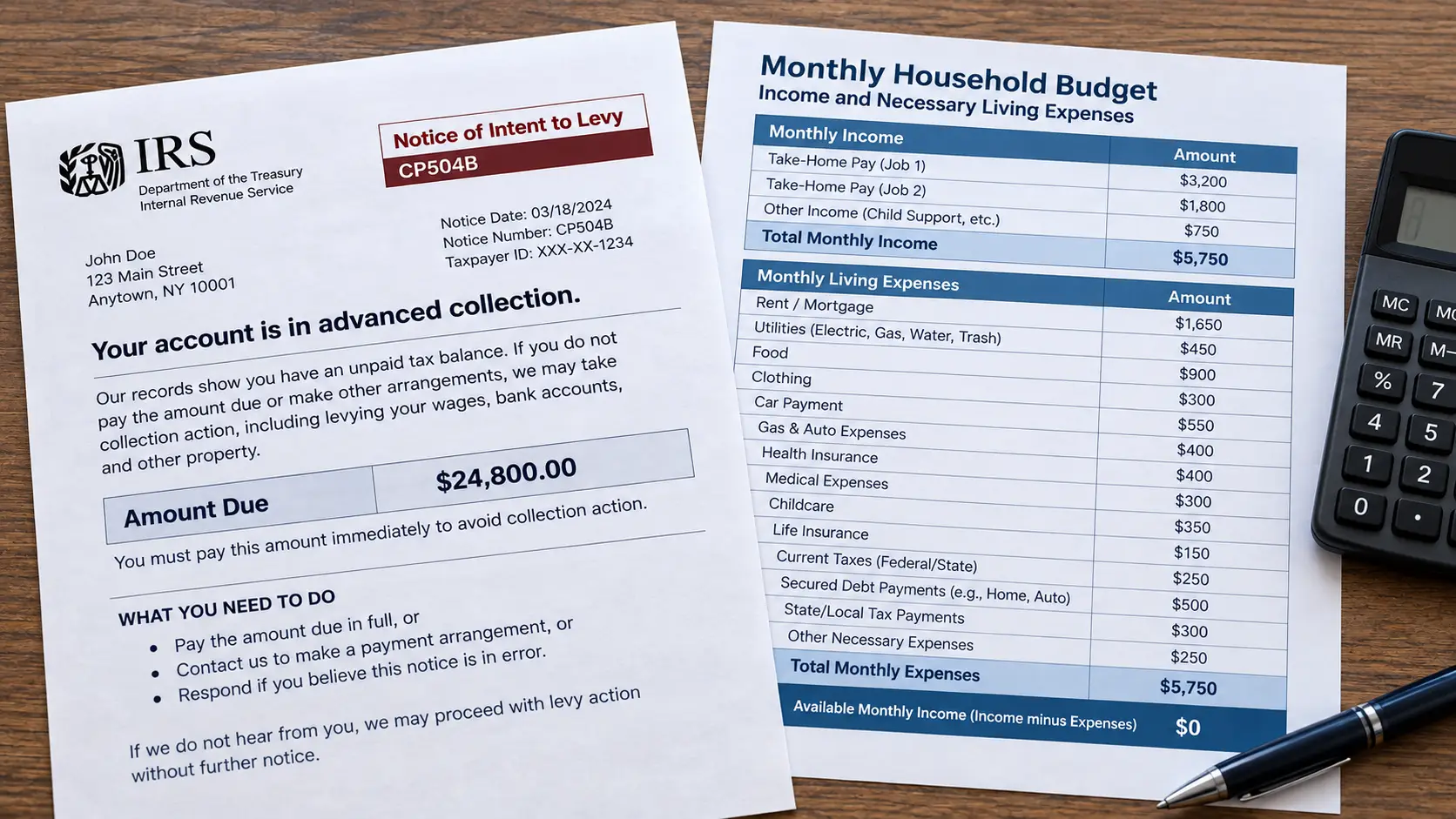
WHAT IS CURRENTLY NOT COLLECTIBLE STATUS?
Currently Not Collectible (CNC) is an IRS collection status used when paying a tax debt would create financial hardship. For hardship purposes, the IRS looks at whether a taxpayer can pay the liability while still meeting reasonable basic living expenses.
To make that determination, the IRS may analyze your income, allowable living expenses, assets, and equity using a Collection Information Statement such as Form 433-A, 433-F, or 433-B. When the financial analysis shows that there is no ability to make a payment without causing hardship, the IRS may place the account in Currently Not Collectible status and temporarily suspend most collection activity.
CNC does not eliminate the tax debt. The balance remains due, and penalties and interest generally continue to accrue while the account is in CNC status.
HOW DOES THE IRS DETERMINE FINANCIAL HARDSHIP?
The IRS does not determine Currently Not Collectible status based solely on the amount of tax debt you owe. It evaluates your overall financial condition to determine whether you have the ability to make payments after covering necessary living expenses.
This analysis generally includes your income, allowable living expenses, assets, and equity. The IRS may require a Collection Information Statement and supporting documentation to verify the financial information provided.
1. MONTHLY INCOME
The IRS reviews household income from wages, self-employment, Social Security, pensions, investments, and other sources to determine your ability to pay.
2. NECESSARY LIVING EXPENSES
The IRS considers necessary expenses such as housing, utilities, food, clothing, transportation, health care, taxes, and other essential costs.
3. ASSETS & EQUITY
The IRS may review bank accounts, investments, real estate, vehicles, retirement accounts, and other assets to determine whether funds are available.
4. ABILITY TO PAY
The IRS evaluates your complete financial picture to determine whether making a tax payment would prevent you from meeting necessary living expenses.
MONTHLY INCOME − ALLOWABLE LIVING EXPENSES → ABILITY TO PAY
WHAT HAPPENS WHEN YOUR ACCOUNT IS PLACED IN CNC STATUS?
When the IRS places an account in Currently Not Collectible status because of financial hardship, active collection efforts are generally suspended. However, the tax liability remains on the account, and CNC comes with several important considerations.
1. COLLECTIONS PAUSED
The IRS generally stops active collection efforts, including attempts to levy wages or bank accounts, while the account remains in CNC status.
2. DEBT REMAINS
CNC does not forgive the balance. Penalties and interest generally continue to accrue on the unpaid tax debt.
3. TAX LIENS
CNC does not automatically prevent the IRS from filing a Notice of Federal Tax Lien, and an existing tax lien is not automatically released because CNC status is granted.
4. FINANCIAL REVIEWS
CNC is generally temporary. The IRS may periodically review your ability to pay and resume collection if your financial condition improves.
The IRS collection statute continues to run while an account is in CNC status. In general, the IRS has 10 years from the date a tax is assessed to collect it, although certain events can suspend or extend that period. If the applicable Collection Statute Expiration Date is reached while the account remains in CNC status, the IRS generally can no longer collect that liability.
HOW WE REQUEST CURRENTLY NOT COLLECTIBLE STATUS
1. Review Your Financial Situation
We analyze your income, necessary living expenses, assets, tax debt, and overall financial condition to determine whether CNC may be appropriate.
2. Prepare the Financial Disclosure
We prepare the applicable Collection Information Statement and organize the documentation needed to substantiate your income, expenses, assets, and hardship.
3. Present the Case to the IRS
We provide the required financial information, communicate with the IRS, and advocate for Currently Not Collectible status based on your circumstances.
4. Confirm the Resolution
We follow through with the IRS to confirm CNC status and explain what to expect while your account remains classified as currently not collectible.
IS CURRENTLY NOT COLLECTIBLE THE RIGHT OPTION?
Currently Not Collectible status is not the only way to address IRS tax debt. Depending on your ability to pay, financial circumstances, and the amount you owe, another resolution option may be more appropriate.
IRS PAYMENT PLANS
If you can afford monthly payments, an installment agreement may allow you to resolve your tax debt over time.
OFFER IN COMPROMISE
If you qualify, an Offer in Compromise may allow you to settle your tax debt for less than the full amount owed.
PENALTY ABATEMENT
If penalties have increased your balance, you may qualify to have certain penalties reduced or removed.
CURRENTLY NOT COLLECTIBLE FAQs
Does Currently Not Collectible status forgive my tax debt?
No. CNC temporarily suspends IRS collection activity because of financial hardship, but it does not eliminate the tax liability. Penalties and interest generally continue to accrue.
How long can I stay in Currently Not Collectible status?
There is no single fixed period. The IRS may review your financial situation periodically and can resume collection if your ability to pay improves. The collection statute generally continues to run while an account is in CNC status.
Can the IRS levy my wages or bank account while I'm in CNC?
CNC generally stops active levy enforcement while the account remains in that status. However, CNC does not prevent the IRS from filing a Notice of Federal Tax Lien or automatically remove an existing lien.
Do I have to provide financial information to qualify for CNC?
In many cases, yes. The IRS may require detailed information about your income, living expenses, assets, and equity, along with supporting documentation, to determine whether paying would create financial hardship.
Can I later apply for an Offer in Compromise or payment plan?
Yes. CNC does not permanently lock you into one resolution. If your circumstances change—or another resolution becomes more appropriate—you may later pursue an Offer in Compromise or installment agreement if you meet the applicable requirements.