
IRS TAX DEBT PAYMENT OPTIONS
IRS PAYMENT PLANS & INSTALLMENT AGREEMENTS
If you owe the IRS but cannot pay your tax balance in full, an installment agreement may allow you to make monthly payments over time. Switchback Accounting can evaluate your payment plan options, help determine an appropriate arrangement, and represent you throughout the process.
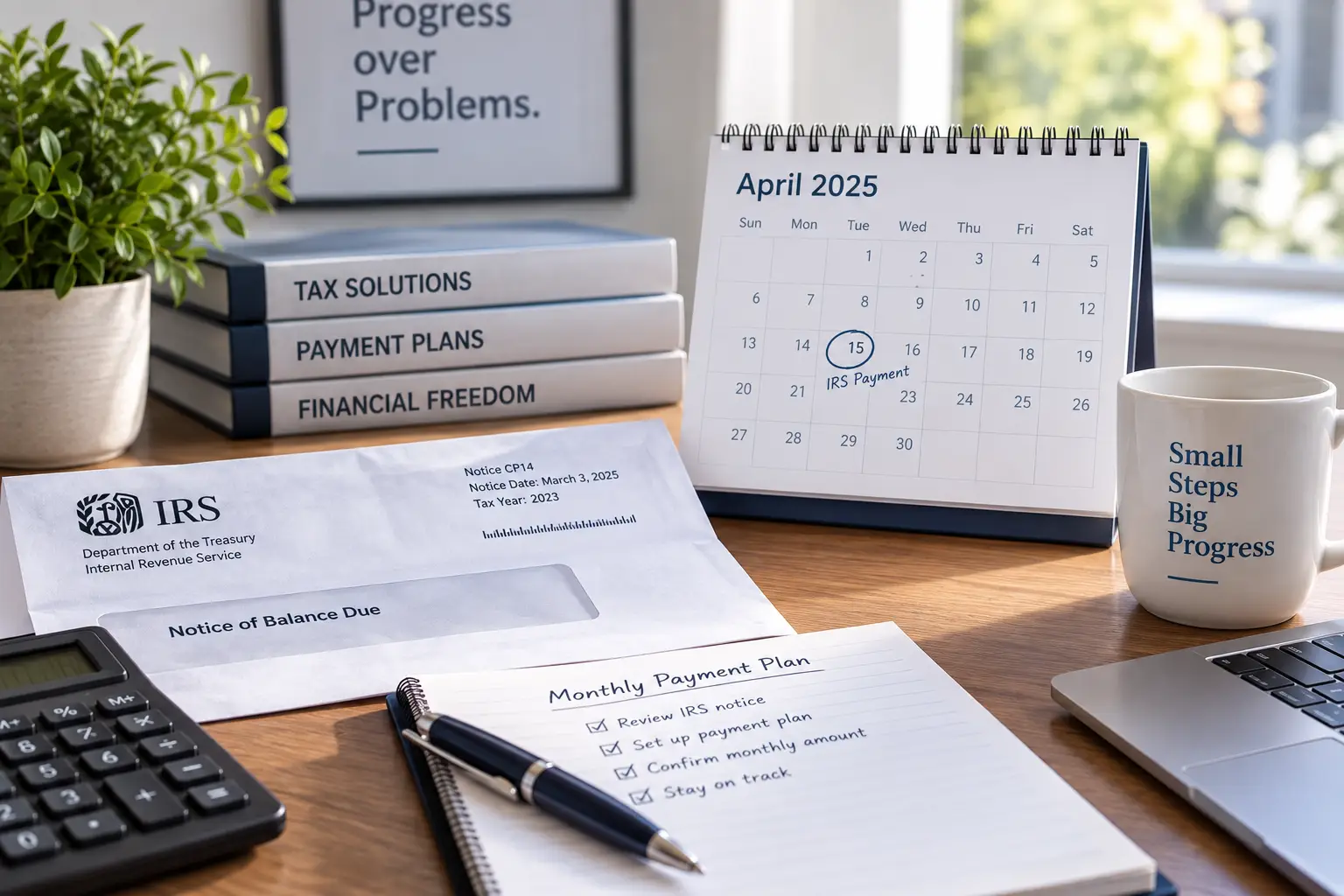
WHAT IS AN IRS PAYMENT PLAN?
An IRS payment plan, also known as an installment agreement (IA), allows taxpayers who cannot pay their full tax balance immediately to make payments over time. Depending on the amount owed and your circumstances, different types of payment arrangements may be available.
Setting up a payment plan does not eliminate the underlying tax debt. Penalties and interest generally continue to accrue until the balance is paid in full, so choosing an appropriate payment arrangement involves more than simply selecting a monthly payment amount.
We evaluate your tax balance, financial circumstances, filing compliance, and the time remaining for the IRS to collect the debt to help determine which payment option may be appropriate for your situation.
TYPES OF IRS PAYMENT PLANS
The IRS offers different ways to pay a tax balance over time. Which option may be available depends on factors such as how much you owe, the type of tax debt, your filing compliance, your financial circumstances, and the time remaining for the IRS to collect the debt.
SHORT-TERM PAYMENT PLAN
Additional time to pay your tax balance in full within 180 days, without establishing a long-term installment agreement.
SIMPLE PAYMENT PLAN
Many individuals owing $50,000 or less may qualify for monthly payments without providing a detailed financial statement.
ROUTINE IA
When a Simple Payment Plan isn’t available, the IRS may determine monthly payments based on your income, expenses, assets, and ability to pay.
PARTIAL PAYMENT IA
If you cannot fully pay the debt before the collection period expires, you may qualify to make affordable monthly payments based on your finances.
HOW DOES THE IRS DETERMINE YOUR MONTHLY PAYMENT?
The amount you pay each month depends on the type of payment plan and your individual circumstances. Some IRS payment plans can be established without a detailed financial analysis, while others require the IRS to review your ability to pay.
When financial information is required, the IRS may evaluate your income, necessary living expenses, assets, and equity to determine how much you can afford to pay each month. The IRS may also apply its financial standards when determining which expenses are considered allowable.
The amount of time remaining on the IRS Collection Statute Expiration Date (CSED) can also affect the payment arrangement, particularly when the tax debt cannot be fully paid before the collection period expires.
INCOME − ALLOWABLE EXPENSES → ABILITY TO PAY
THE IRS PAYMENT PLAN PROCESS
Setting up the right IRS payment plan starts with understanding your tax situation and determining which type of agreement may be available. We evaluate your account, identify an appropriate payment strategy, and handle the process with the IRS on your behalf.
1. REVIEW YOUR TAX SITUATION
We review your tax balances, filing compliance, collection status, and the time remaining for the IRS to collect the debt.
2. EVALUATE YOUR OPTIONS
We determine which payment arrangements may be available and whether the IRS will require a detailed financial analysis.
3. PREPARE & NEGOTIATE
We prepare the necessary information and communicate with the IRS to establish an appropriate monthly payment arrangement.
4. ESTABLISH THE AGREEMENT
Once the agreement is approved, we help you understand the payment terms and what is required to keep the agreement in good standing.
WHAT HAPPENS WHILE YOU’RE ON AN IRS PAYMENT PLAN?
Once an installment agreement is established, you must make the required payments on time and remain current with your ongoing tax obligations. This generally means filing required tax returns on time and paying new taxes as they become due.
Penalties and interest generally continue to accrue on the unpaid balance until it is paid in full. Future federal tax refunds may also be applied to the outstanding tax debt while you are making installment agreement payments.
If you miss required payments or incur new unpaid tax liabilities, the IRS may default or terminate the agreement. If your financial circumstances change and the existing payment is no longer affordable, it may be possible to request a modification of the agreement.
WHAT IF A PAYMENT PLAN ISN’T THE RIGHT OPTION?
An IRS payment plan can be an effective way to resolve tax debt, but it is not always the best option. If the monthly payment would be unaffordable, you cannot fully pay the debt within the available collection period, or your circumstances support another form of relief, a different resolution strategy may make more sense.
OFFER IN COMPROMISE
If you cannot afford to pay the full tax debt, you may qualify to settle with the IRS for less than the amount owed.
CURRENTLY NOT COLLECTIBLE
If making payments would prevent you from covering necessary living expenses, the IRS may temporarily pause collection activity.
PENALTY ABATEMENT
If you qualify for penalty abatement, certain IRS penalties may be reduced or removed, lowering the overall amount you need to resolve.
We evaluate the available tax resolution options before recommending a strategy based on the facts of your case.
IRS PAYMENT PLAN FAQs
How much will my monthly IRS payment be?
Your monthly payment depends on the type of payment plan, the amount you owe, the time remaining for the IRS to collect the debt, and, in some cases, your ability to pay. Some payment plans can be established without a detailed financial analysis, while others require the IRS to review your income, allowable expenses, assets, and overall financial circumstances.
How long can an IRS payment plan last?
The length of an IRS payment plan depends on the type of agreement and the amount of time remaining for the IRS to collect the tax debt. Under the current Simple Payment Plan rules, most qualifying taxpayers may have up to the remaining collection period—generally up to 10 years from the date the tax was assessed—to pay the balance. Other installment agreements may have different terms based on the taxpayer’s circumstances.
Does the IRS stop penalties and interest on a payment plan?
No. Penalties and interest generally continue to accrue on the unpaid tax balance while you are making payments. Because a longer payment period can increase the total amount of penalties and interest paid, it may be beneficial to pay more than the required monthly amount when financially possible.
Depending on the value and equity of your assets, they may increase the amount the IRS expects you to offer. An Offer in Compromise may still be possible when you own assets, but your entire financial situation—including income, expenses, asset equity, and future ability to pay—must be evaluated.
Can the IRS levy me while I have an installment agreement?
Generally, the IRS is prohibited from levying while an installment agreement is in effect. Levy restrictions also generally apply while a proposed installment agreement is pending, for certain periods following rejection or termination, and while a timely appeal is being considered. There are limited exceptions, so maintaining the terms of the agreement and staying current with ongoing tax obligations is important.
We can review the IRS’s reasons for rejection, determine whether an appeal is appropriate, and represent you through the appeals process. If an appeal is not the best course of action, we can evaluate other tax resolution options, such as an installment agreement or Currently Not Collectible status.
What happens if I can no longer afford my IRS payment plan?
If your financial circumstances change and you can no longer afford your monthly payment, you may be able to request a modification of your installment agreement. Depending on your new financial situation, the IRS may require updated financial information and another resolution option—such as a Partial Payment Installment Agreement, Currently Not Collectible status, or an Offer in Compromise—may also need to be considered.
It is important to address the problem before simply stopping payments, because missed payments or new unpaid tax liabilities can cause the IRS to propose termination of the agreement.
If you fail to meet the payment terms or required future tax compliance, the IRS may default the offer and reinstate the original tax liability, less payments and credits received. If a Notice of Federal Tax Lien was filed, the IRS generally releases the lien after the payment terms of the accepted offer have been completed.